|
|
||||
|
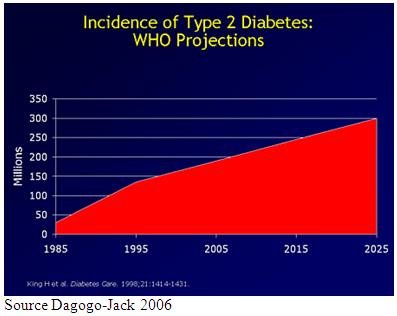
Diabetes has become a common chronic disease, with type 2 diabetes (T2DM), accounting for the vast majority of cases. In Ontario, there was a 31% increase in yearly incidence with the 1995 and 2003 with a prevalence of about 8.8% in 2005.The DIASCAN study, published in 2001, found that 16.4% of primary care visits for patients 40 or older had known diabetes. This data was further supported by an Ontario study which found that the diabetes incidence rates were greater in those under 50 (94% increase in 20-49 year olds vs 63% increase in those over 50 and older, p<0.0001). The incidence of type 2 diabetes is increasing at a dramatic rate with projection by the World Health Organization (WHO) that there will be 300 million people with diabetes worldwide by 2025, which is a doubling from the rate in the year 2000. Much of this is attributable to increased obesity secondary to increased consumption of energy dense foods and a more sedentary life style.
|
||||